

Over ten years of classroom experience
Before I founded Collaborated Learning, I spent over ten years teaching and tutoring children in New York City and Los Angeles. That’s where I noticed that the method mattered less than creating the right match for each child’s individual learning style.
Ulana has spent more than ten years teaching and supporting children in New York City and Los Angeles. She holds a dual master's degree from NYU in Early Childhood Education and Early Childhood Special Education, and has taught as an adjunct instructor at NYU's Steinhardt School of Education.
During Ulana's classroom years, at schools including The Cooke School, Quad Preparatory School, LREI, and PS 41, she co-taught alongside renowned, nationally respected speech-language pathologists, occupational therapists, pediatric neuropsychologists, and developmental specialists. She watched the same reading program work for one child and fail another. It's where she learned what no certification teaches: the method matters less than the collaboration and individualization around it.
She's now based in Los Angeles, where she works with students from Brentwood School, John Thomas Dye, Seven Arrows, Curtis, and Piper, among others. She continues to support NYC families, including students from Dalton, Horace Mann, Saint Ann's, PS 234, Churchill, and Lycée Français. Ulana also accepts clients through California's Self-Determination Program, making her services accessible to families beyond those paying privately.
Educational therapy as a field is defined and standardized by the Association of Educational Therapists (AET), the profession's certifying body since 1979.
How I collaborate
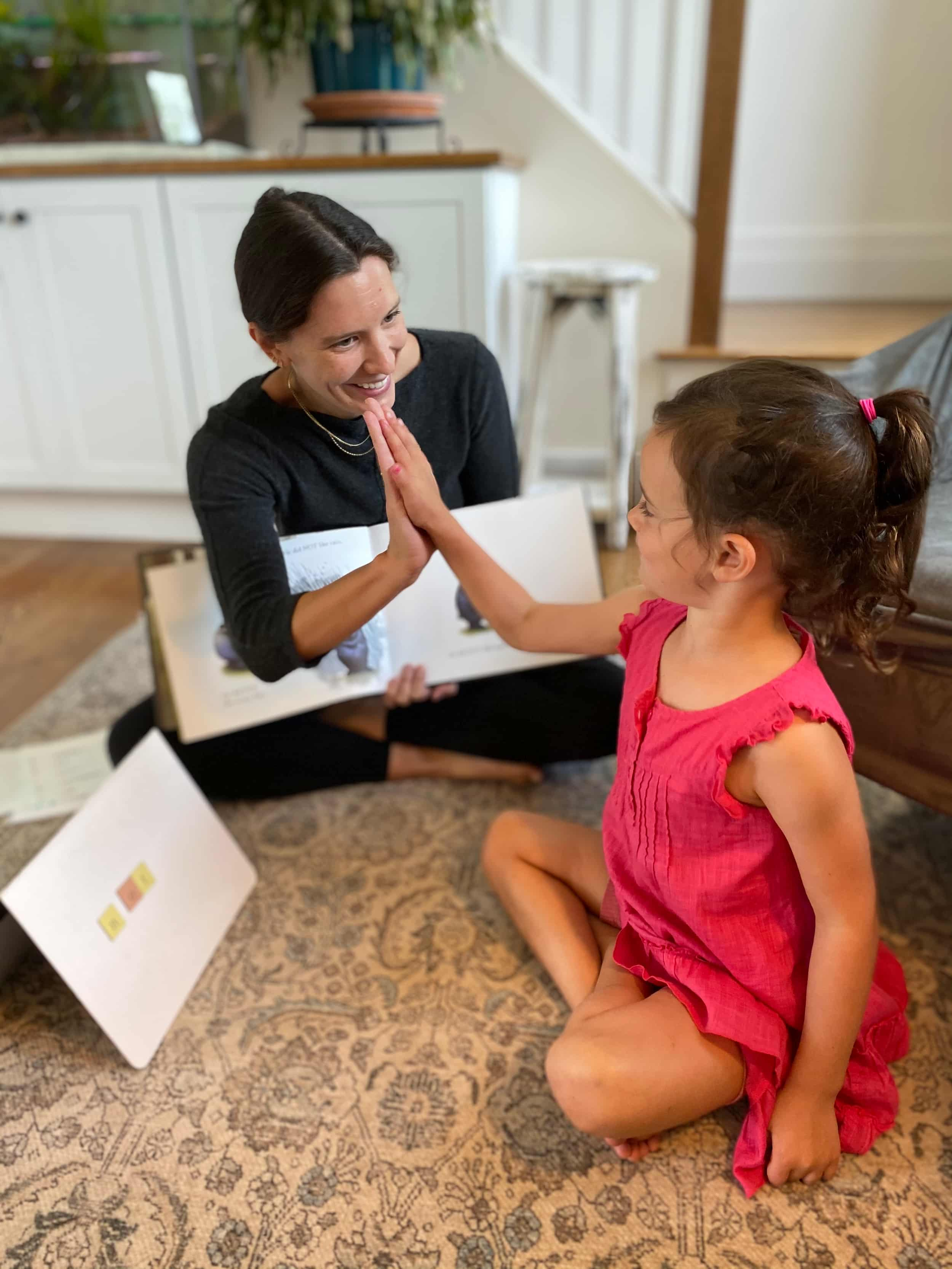
A child working on reading is often also working on articulation with a speech-language pathologist, pencil grip with an occupational therapist, or attention with a developmental specialist. Most educational therapy happens separately from that work. When your child already has a team, I join it by sharing what I'm seeing after each session and aligning on goals so the work adds up instead of competing for your child's time and energy.
The goal is a child who no longer needs my help
Homework that stops being a nightly negotiation.
A reader who picks up a book without being asked.
A student who has a plan for how to approach hard work and knows how to explain it step by step.